Best smart trainers for indoor cycling: a specification-based shortlist
No hands-on testing yet, and we say so. This shortlist is built from manufacturer specifications with sources, organised by the decisions that matter: drive type, price band, protocols and gradient.
Ole BirkelandFounder, Cadexa
- Published
- 31 Oct 2026
- 2 min read
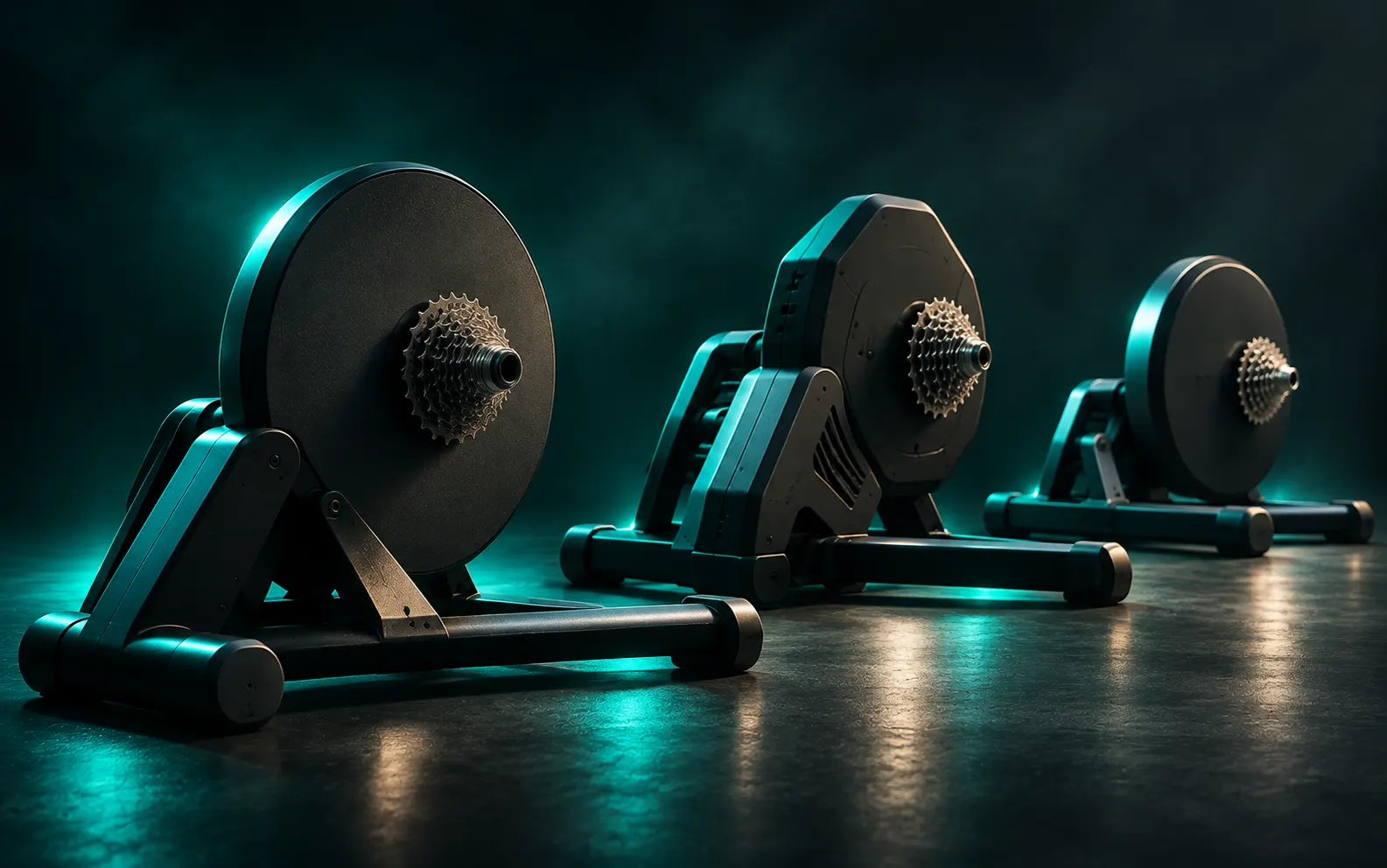 AI-generated image
Demonstration content. This article was created to show how the platform works. Specifications are manufacturer claims gathered from public pages and have not been independently verified; nothing here reflects hands-on testing by Cadexa.
Guide · Compared using manufacturer specifications and documented sources, not physical testing. How we work.
How this list was made
This is a specification comparison, not a test. We have not yet ridden these trainers side by side; the first hands-on reviews are in progress. Every figure comes from a manufacturer page or a cited secondary source and is visible, with its source, on each product page. Our selection criteria:
- Currently sold by the manufacturer or a successor model named where it is not.
- Bluetooth FTMS declared, so phone apps, including Cadexa, can control it.
- ERG mode available.
- Within one of four price bands so that each band has a clear pick.
- Ranked within a band by maximum gradient, claimed accuracy and connectivity breadth, in that order. Ties go to the unit with more concurrent Bluetooth connections.
Commission plays no role; several products on this list have no affiliate link at all.
Mid-range direct drive
Wahoo Fitness
KICKR CORE 2
- Trainer type
- direct-drive
- Maximum resistance
- 1800 W
- Maximum simulated gradient
- 16%
The second-generation CORE keeps the 1,800 W, 16 % and ±2 % figures of the original and adds built-in Wi-Fi, three simultaneous Bluetooth connections and a 10 Hz data mode. It lost weight, and it lost the fold-out legs. Its flywheel is passive, so the −10 % figure on the spec sheet is a reporting range, not a descent simulation.
Premium direct drive
Elite
Justo 2
- Trainer type
- direct-drive
- Maximum resistance
- 2300 W
- Maximum simulated gradient
- 24%
Elite’s current premium unit declares a 24 % gradient and a ±1 % accuracy claim, both ahead of the CORE 2, with flex feet that allow a little lateral sway. Firmware is managed through the Elite app.
Flagship
Garmin (Tacx)
Tacx NEO 3M
- Trainer type
- direct-drive with built-in multidirectional motion plates
- Maximum resistance
- 2200 W
- Maximum simulated gradient
- 25%
The NEO 3M is the one trainer here with a motor-driven flywheel, which means real descent simulation and road-feel effects, plus built-in multidirectional movement. It is also the heaviest and the most expensive band.
Entry level
Van Rysel (Decathlon)
D100 (Home Trainer with Zwift Cog and Click)
- Trainer type
- direct-drive
- Maximum resistance
- 600 W
- Maximum simulated gradient
- 6%
Decathlon’s D100 brings direct drive to the entry band with FTMS and ANT+ FE-C declared. Expect a lower gradient ceiling and a lighter flywheel than the units above.
Wheel-on
Elite
Tuo
- Trainer type
- wheel-on
- Maximum resistance
- 1300 W
- Maximum simulated gradient
- 10%
If you swap between several bikes or want the quickest setup, the Tuo is Elite’s current wheel-on unit. Budget for a trainer tyre.
Side by side
Side by side
KICKR CORE 2 vs Justo 2 vs Tacx NEO 3M vs D100 (Home Trainer with Zwift Cog and Click)
Open the full comparison →What would change this list
Hands-on testing, which is scheduled: ERG response time, accuracy against a reference power meter across a 90-minute session, noise at 200 W and 40 km/h, and how each unit behaves at 15 % and 3 km/h. When those numbers exist they will appear in a separate “Cadexa measured” column on each product page and this guide will be reclassified.
Products recommended in this guide
Wahoo Fitness
KICKR CORE 2
Mid-range direct drive with Wi-Fi and three Bluetooth connections; the specification most riders need.
- Trainer type
- direct-drive
- Maximum resistance
- 1800 W
- Maximum simulated gradient
- 16%
Elite
Justo 2
Premium direct drive with a motion-capable design and a strong gradient figure.
- Trainer type
- direct-drive
- Maximum resistance
- 2300 W
- Maximum simulated gradient
- 24%
Garmin (Tacx)
Tacx NEO 3M
Flagship with a motor-driven flywheel: the only design here that simulates descents.
- Trainer type
- direct-drive with built-in multidirectional motion plates
- Maximum resistance
- 2200 W
- Maximum simulated gradient
- 25%
Van Rysel (Decathlon)
D100 (Home Trainer with Zwift Cog and Click)
Entry-level direct drive if budget is the first constraint.
- Trainer type
- direct-drive
- Maximum resistance
- 600 W
- Maximum simulated gradient
- 6%
Alternatives worth considering
Elite
Tuo
Current wheel-on option for riders who swap bikes often.
- Trainer type
- wheel-on
- Maximum resistance
- 1300 W
Wahoo Fitness
KICKR (v6)
The step up from the CORE 2 if you want the higher resistance ceiling and built-in Ethernet options.
- Trainer type
- direct-drive
- Maximum resistance
- 2200 W
JetBlack Cycling
VICTORY
Budget direct drive with a complete protocol set.
- Trainer type
- direct-drive
- Maximum resistance
- 1800 W
About the author
Ole BirkelandFounder, Cadexa
Builds the Cadexa indoor-cycling app in Bergen, Norway, which means living inside the Bluetooth FTMS specification and watching how trainers actually respond to it. Writes the technology explainers and runs the compatibility tests.
Related reading
Smart trainers
Bluetooth FTMS explained: the protocol that lets an app control your trainer
Every modern smart trainer speaks FTMS. Here is what the Fitness Machine Service actually does, what the control point commands are, and why “supports FTMS” does not guarantee that every app feature works.
Smart trainers · Wahoo Fitness
Wahoo KICKR CORE 2: features and compatibility
What changed from the original CORE, what did not, and how the second generation lines up with Bluetooth FTMS control from a phone. A specification-based overview ahead of our hands-on test.

Smart trainers
ERG mode vs simulation mode: what your trainer is actually doing
Two control modes, two different jobs. ERG holds the watts no matter what you do; simulation mimics a road and lets you decide how hard to push. Knowing the difference changes how you train.